
Phi and the Tetractys Series – Part 2 (revised 28-07-25)
Naming Before Knowing - Field Recursion and Anachronisms Explained

Introduction
The following work presents a direct challenge to the current scientific and philosophical establishment:
If there exists a more structurally coherent, empirically grounded explanation for the enduring paradoxes of physics, myth, prophetic insight, and historical naming anomalies than the IXOS system, it must be demonstrated.
Otherwise, we must begin to accept that IXOS - a unified recursive field framework - represents the most advanced integrative theory in human history to date.
The IXOS framework is built on a field theory enabled by the infinite recursive and creative form of the torus. This form takes its structure and dynamics from the ratio known as Phi.
Phi is the backdrop of all universal form and function. It is the only geometric form that endlessly retraces itself upon and within itself without distortion or interference.
In the physical universe, the emergent stage of this Phi-form evolution unfolds through the simple relationships embedded in the Tetractys - the numerical sequence 1–2–3–4, culminating in the sacred decad (10), as understood by the Pythagoreans. From light into matter, from matter into the elements, and then inward into biological life, the pattern of emergence has followed a fractal recursion that is now structurally evident.
In Part 1 of this series, we demonstrated how this Phi-governed structure gives rise to DNA itself. What follows here takes those same principles - the ratios, sequences, and recursive frameworks - and extends them into areas traditionally dismissed as metaphysical speculation or unexplained anomaly.
This is not mysticism. It is not belief.
It is based on:
The resolution of paradoxes in light, time, and matter using unified constants (SOL, c, and Phi)
The reconciliation of mythic and religious structures with empirical geometry and symbolic function
The demonstration that language has, repeatedly, encoded functional truths before those functions were scientifically recognised
The explanation of prophetic and shamanic insight as structured interaction with a recursive time-domain field
And the grounding of these claims in ratio, measurement, linguistic drift, and symbolic coherence across thousands of years and multiple cultures
We will present clear examples:
Where elements were named centuries before their function was known, yet align precisely with their eventual role
Where demonised religious symbols - the serpent, the pentagram, the light-bearer - encode precise geometric or cosmological principles
Where mythic cycles reflect the same recursive field structure observable in physical systems
Where time, when understood through field recursion, cannot remain linear under coherent scrutiny
Where historical artefacts and advanced cultural developments appear out of sequence with accepted evolutionary timelines
And where documented paranormal events may be better explained through field recursion than through metaphysical or religious frameworks
These phenomena cannot be explained by chance, unconscious archetype, or theological design. They can only be coherently addressed through a structured, recursive, field-aware cosmology - which is precisely what IXOS provides.
Unless falsified by a more complete framework, these convergences must now be recognised as compelling evidence for the validity of the IXOS system. As such, they move us closer to identifying IXOS not merely as a theory of integration, but as the long-sought Theory of Everything.
Establishing Names Before the Full Function is Discovered
We begin by examining anomalous cases in which certain elements were named with words that appear to describe their eventual function with striking accuracy, despite those functions only becoming known much later. In some examples, the lines are blurred: the name and initial function were broadly understood at the time, yet subsequent discoveries reveal that the same term continues to correspond with deeper and more structurally significant properties that could not have been anticipated.
This pattern, rather than being dismissed as coincidence or retroactive interpretation, suggests a deeper structural cause. I propose that it is evidence for the IXOS model. According to IXOS, recursive archetypal functions manifest across scales and timescales, with names and concepts emerging from early interaction with field-structured reality. These names may carry embedded information reflective of future recognitions.
Under this view, archetypes are not projections or inventions, but structural constants. The typology remains stable, even as its manifestations become more refined through later discovery. What emerges is not symbolic overlay, but a consistent pattern of realisation, where terminology born of intuition or preliminary function continues to align with later empirical realities.
Such alignment only makes logical sense if the Phi–Tetractys structure proposed in IXOS is correct. That is, if the universe unfolds as a fractal holographic recursion of matter, field, and mind - each stage reflecting deeper aspects of the same archetypal architecture - then the naming of forms before their full function is not mysterious. It is structurally inevitable.
These naming anomalies, when viewed through this lens, are no longer historical curiosities. They are predictable expressions of field-structured emergence. And they cannot reasonably be explained by coincidence.
Oxygen - Naming the Force Before Its Function
The term oxygen was coined in 1777 by the French chemist Antoine Lavoisier, based on the belief that this element was the universal component responsible for forming acids. The name was derived from the Greek roots oxys (ὀξύς), meaning “sharp” or “acid,” and genes (γενής), meaning “former” or “producer.” Thus, oxygen literally meant “acid former.” This was later shown to be chemically incorrect, as not all acids contain oxygen and not all oxygen-containing compounds are acidic.
Despite this foundational error, the name persisted. What makes this etymology particularly striking is that, over a century later, the word root gen (generate, genesis) would become central in the naming of genes - the heritable units of biological information - and that oxygen would be discovered to play a central role in energy production, gene expression, and epigenetic regulation.
Functional Role of Oxygen in Biological Systems
Although initially mischaracterised as an acid-former, oxygen’s actual role in life processes is far more foundational:
It serves as the terminal electron acceptor in the mitochondrial electron transport chain, enabling oxidative phosphorylation and ATP generation - the energy source for nearly all biological functions
It regulates gene expression through oxygen-sensitive transcription factors, such as HIF-1α, which activates under hypoxic conditions and modulates numerous genes associated with growth, metabolism, and survival
Oxygen also influences epigenetic states via ROS (reactive oxygen species) signalling, and plays a key role in immune response, cellular differentiation, and apoptosis
Thus, oxygen is not merely a reactant - it is a governing condition for genomic behaviour. Its presence determines which genes activate, when, and to what degree. In this sense, oxygen can be said to generate gene function.
The “Ox” Root and the Aleph
Beyond its modern Greek etymology, the syllable ox resonates with a far older symbolic tradition. In early Semitic languages, Aleph (𐤀) - the first letter of the alphabet - was represented as an ox head, symbolising strength, origin, and movement. This was passed to the Greek Alpha (Α), and from there into the Latin alphabet.
In ancient cultures, the ox was the initiator, the one who draws the plough - representing force applied to matter, and the bringing of order to chaos. In Hebrew theology, Aleph is silent but foundational - the breath of God, or the energetic potential behind all spoken forms.
It is symbolically significant, therefore, that oxygen - the element that initiates metabolism, movement, and biological energy - should bear the name of the ox root, associated since antiquity with initiation and generative force.
GEN and Genes
The suffix -gen in oxygen simply meant producer or generator, but has since aligned with the term gene - a word first introduced by Wilhelm Johannsen in 1909, well over 100 years after Lavoisier’s naming of oxygen.
The modern gene is the blueprint of biological inheritance. Oxygen, as shown, is now understood to govern the expression and regulation of these blueprints. The name oxygen, composed long before any molecular genetics existed, accurately describes its role: the generator of genes in function, if not in structure.
Summary
The term oxygen was coined on a false chemical assumption but turned out to contain unexpected predictive accuracy:
Ox = initiator, breath, Aleph, movement
Gen = generator, originator, now associated with genetic function
Functionally, oxygen governs gene activation and energy production
The name prefigured the later discovery of its deeper biological role
This example illustrates a timing anomaly in scientific language, where nomenclature appears to anticipate later understanding with structural precision.
In the IXOS framework, this can be interpreted as evidence of field recursion - where linguistic emergence aligns with deeper structural function before that function is empirically described.
Lithium - The First Stone and the Structure of Origin
The element lithium (Li) was discovered in 1817 by Swedish chemist Johan August Arfvedson, who identified it in a mineral sample of petalite. The element’s name derives from the Greek lithos (λίθος), meaning “stone” - hence lithium as “the stone element.” At the time, lithium’s properties were largely unknown, and its biological or cosmological significance was not yet conceived.
Over a century later, lithium was found to occupy a unique position in cosmology, neuroscience, and field chemistry. This raises significant questions about how its symbolic and functional associations were so precisely encoded in its name long before those roles were understood.
Cosmological Significance - The First Solid After the Big Bang
In contemporary astrophysics, lithium is recognised as the third element formed after the Big Bang - following hydrogen and helium - making it the first stable solid element in the universe.
Hydrogen (1) and helium (2) are gases; lithium (3) is the first metallic solid and the lightest solid element to emerge
Its formation occurred within the first few minutes of cosmic time, during Big Bang nucleosynthesis
It is comparatively rare because it is both easily destroyed in stellar interiors and difficult to form in large quantities
Thus, lithium represents the solidification of energy into mass - a transition from plasma to particulate form. Its name, the stone, is now structurally correct: it was indeed the first stone.
This is also direct evidence of the Tetractys formation as established in conventional physics. From a foundation of energy just after what is called the Big Bang, four structures came into being from that energy substrate: hydrogen, then helium, then lithium, then beryllium.
The main differences between these atomic structures are simple but significant: hydrogen has one electron, helium two, lithium three, and beryllium four. This well-established dataset aligns with the emergence theory of IXOS as a Phi–Tetractys fractal evolution.
Neurological and Bioenergetic Properties
In neuroscience, lithium is now widely used as a mood stabiliser, particularly in the treatment of bipolar disorder and major depressive conditions. It is known to influence:
Neurotransmitter regulation (including serotonin and dopamine systems)
Cellular signalling (through modulation of G-proteins and second messengers)
Circadian rhythm and gene expression, particularly in the prefrontal cortex and hypothalamus
Though its full mechanism remains under investigation, lithium is understood to have a global dampening effect on neural overactivity, contributing to emotional balance and cognitive coherence.
In this role, lithium functions as a psychoenergetic stabiliser - not just chemically, but at the level of oscillatory brain field coherence.
The Ternary Role of Lithium - Field Balance and Archetypal Structure
This position as the third in a trinity of formation is significant. IXOS theory describes how any initial duality will, through recursive polarisation, give rise to a transcendent third principle - a new formation expressing emergent properties. This is consistent both with field dynamics and with symbolic traditions across ancient cultures.
Lithium is precisely such an expression. Where hydrogen and helium represent a simple sequence of one and two electrons respectively, lithium introduces a third. This is not simply additive. It marks a new phase - a distinct transformation of state. The duality (two electrons) becomes a point of field tension that necessitates the emergence of a third position - a stabilising node with new energetic behaviour.
In field terms: one became two, and the two created a third.
This formation model is echoed in mythic trinitarian structures across cultures. The classic triad of Father, Mother, and Son reflects the same progression. The son, representing the new formation, often returns to the mother as the father - completing the recursion. This is not symbolic flourish. It is a mirror of the same physics described by IXOS.
The outward progression defines the positive polarity. The return inward defines the negative. The resultant new phase - the son - is a synthesis that forms a new order out of the old. This recursive triune structure is not limited to mythology. It describes the actual behaviour of matter as it emerges through the field.
This is the 1–2–3 of the Tetractys.
That lithium, as the first stable solid, should express this ternary phase transition - and that it should also act today as a neurological balancing agent in human biochemistry - is not coincidence. It is structural. It reflects a universal principle: the emergence of balance through the recursive synthesis of polarity.
Symbolic Convergence
The convergence of the name lithium with its later-discovered roles presents another clear example of a naming anomaly:
Named for stone
Later found to be the first stable solid in the universe
Later still found to be a mental stabiliser - a grounding agent at the neurological level
Now understood to operate in field regulatory functions at the cellular and possibly systemic level
No such convergence was intended at the time of naming.
Summary
Lithium was named for its stony origin in mineral form. Yet:
It turned out to be the first stable solid in the cosmos
It became a neurological stabiliser - metaphorically and biochemically a grounding force
Its name anticipated its cosmological and neurological function across entirely different domains
This anticipatory naming presents a coherence across time that is not explainable through historical causality. In the IXOS model, such phenomena are understood as pre-ripples of field structure - where naming emerges in resonance with function before empirical discovery.
Carbon - 666 and the Genesis of Form
Carbon is the elemental basis of organic life. It forms the backbone of all proteins, carbohydrates, lipids, and nucleic acids. It is the structural foundation of DNA, RNA, and the biochemical infrastructure of all known living systems. It is also, notably, a perfect absorber of light, and in many cultural traditions, symbolically linked to both life and death, form and shadow, generation and dissolution.
Carbon’s atomic number is 6, and it consists of:
6 protons
6 neutrons
6 electrons
This configuration gives rise to the numeric sequence 6-6-6, which has historically been treated as a symbol of evil or "the beast" (notably in Revelation 13:18), yet biochemically it is the signature of life. This section examines carbon’s structural role, its naming history, and the symbolic-numerical convergence that precedes scientific discovery.
Atomic Structure
Carbon’s atomic number (Z) = 6
Isotopic stability: the most abundant isotope is carbon-12 (6 protons, 6 neutrons)
Carbon has four valence electrons, allowing it to form four covalent bonds, making it uniquely suited for chain and ring structures essential to molecular complexity
This structural flexibility gives carbon the capacity for recursion, enabling the formation of DNA, proteins, and dynamic macromolecules.
Carbon as Black Body
Carbon in its elemental form - graphite or soot - appears black due to its ability to absorb a wide range of electromagnetic radiation. It functions effectively as a black body, absorbing and retaining light, heat, and energy.
This optical quality is a physical consequence of its electron band structure
Symbolically, it resonates with concepts of death, decay, and absorption
And yet, within biological systems, it is the source of life
This duality - absorber of light and basis of life - creates a tension embedded in both material function and cultural interpretation.
The "666" Designation and Cultural Misreading
Carbon’s 6-6-6 structure is biochemically standard. It is neither rare nor anomalous. Yet the number 666 has historically been:
Referenced in apocalyptic literature (e.g. Revelation 13:18)
Equated with the “number of the beast”
Used as a marker of spiritual corruption or opposition to divinity
This association predates the discovery of DNA, molecular biology, or the understanding of atomic structure. The fact that the core structural atom of life would later be revealed to carry this numerical pattern raises a significant symbolic question.
If 666 is the “mark of the beast,” then life itself - carbon-based life - has been cast as the beast.
But in structural terms, carbon is not a curse. It is the bearer of form.
Etymology of “Carbon” and Conceptual Drift
The name carbon comes from the Latin carbo, meaning coal or charcoal
It was named for its blackened form, long before its centrality in life processes was known
It is etymologically and conceptually linked to burnt matter, residue, and decay
Yet this black residue forms the scaffold of the genome, the bones of the spiral, and the architecture of thought.
This represents another instance of naming before knowing:
The word carbon existed centuries before atomic theory
The number 6-6-6 had symbolic weight before atomic structure was known
These two threads converged inadvertently, but with precise alignment to function
Consistent with the Gothic Script
In Return of the Storm God, I have demonstrated a consistent set of root words in the languages known as Indo-European, common across the Pan-Eurasian cultures for many thousands of years. These are known as hydronyms, because they are rooted in the action of water - either as the substance, or its action upon other forms. The soft g in the roots gal and gar indicates a sifted, water-based function, while their reciprocals with a hard k as kar and cal describe the action of water upon other forms, creating indentation or dissolution of rock into concavity - and therefore into container.
For example, gal acts upon the stone to create cal (both as solute and as resultant state), which then becomes car - a container or receiver of the fluid. This emerges into gar, which is the root of the word jar - a hard container specifically designed to carry fluid.
In the word carbon, we have a car hydronym. It is a black body that receives and contains fluidic light. Due to that synthesis, a third state is created - in the form of genetics. From the father light into the elemental father matter, through the feminine principle of the spiralic light into form, from the father and mother comes a new son: biological life. This is the ben of car - the car’s ben - carbon. And from that bon is also the root of bone. (see Appendix for full explanation).
The hydronymic cal form of calcium - as karst - is hardened into being through the existence of serpentine genetics. It becomes the backbone of life.
In the ancient mythos, life was given by Atum as breath - Hu - a feminine ethereal substrate, granted by the Word and offered by the Ankh. Male and female created he, then breathed the transcendent third state into the form as life itself.
In the Biblical version, Atum becomes Adam, and the goddess becomes Eve - separated, as usual, by the distorted myth. But the transference of life is said to be as a bone - the rib of Adam. Originally, thousands of years earlier, Atum is said to have used his penis, or baculum (penis bone), to bring forth human life - a much earlier rendering of the same primal tale.
So we see the Tetractys-Phi formula enacted in both ancient myth and modern religion, with words that reflect the form and function exact to the current understanding of physics, chemistry, and biochemistry.
Summary
Carbon is:
Atom number 6
With 6 protons, 6 neutrons, 6 electrons
The foundation of all organic life
A perfect absorber of light
Named long before its scientific significance was known
And numerically cast - rightly or wrongly - as “the beast”
In the IXOS framework, this convergence is not coincidence. It is recursion through field structure. The pattern of life existed before we named it, and the names we chose echo back from the very structures we would later uncover.
Phosphorus - The Light-Bringer in Form and Myth
Phosphorus is an essential element in molecular biology, cosmology, and symbolic tradition. In chemistry, it forms the structural backbone of DNA and RNA. In classical mythology, it was known as Phōsphoros (Greek: Φωσφόρος), literally “light-bearer,” and identified with Lucifer, the morning star - the appearance of the planet Venus just before sunrise.
In this convergence of chemistry, astronomy, language, and myth, phosphorus becomes a unifying element: the structural bridge between light and form, spirit and matter, myth and molecule.
The Role of Phosphorus in DNA
In nucleic acids (DNA and RNA), phosphorus atoms form part of the phosphate group (PO₄³⁻), which links the sugar molecules of adjacent nucleotides
These phosphate bonds make up the sugar–phosphate backbone of the double helix - the stable, repeating structure that holds the genetic code together
Each phosphate group connects to two sugar molecules, forming a phosphodiester bond and creating the long helical framework of DNA
Phosphorus is therefore the structural bridge - light encoded in matter, binding genetic information into a form that can replicate and evolve.
Phōsphoros and the Name Lucifer
The Greek name Phōsphoros means light-bearer or light-bringing, and was used to describe Venus as the morning star - the brightest object in the sky before sunrise.
In Latin, this became Lucifer, from lux (light) and ferre (to carry):
In Isaiah 14:12, the phrase “How you are fallen from heaven, O Lucifer, son of the morning” uses this term, although the original Hebrew is Helel ben Shahar, meaning “shining one, son of dawn”
The Latin Vulgate translated it as Lucifer, which later Christian theology associated with Satan
However, this connection is not present in the original texts, and the name Lucifer originally referred to Venus - not evil, but illumination
Thus, phosphorus - the light-bearing atom in the DNA backbone - shares both function and name with Lucifer and Venus, and its demonisation represents a symbolic inversion.
Timing Anachronism in the Naming of Phosphorus
The element phosphorus was first isolated in 1669 by the German alchemist Hennig Brand, and later named after the classical epithet Phōsphoros - “light-bringer” - because of its natural luminescence when exposed to air.
At the time, nothing was known of:
DNA
Phosphate groups
The role of phosphorus in the transmission of genetic information
And yet phosphorus was given a name that precisely describes its biological function, discovered centuries later:
It links genetic material through phosphate bonds
It enables cellular energy storage and transfer via ATP
It is indispensable for life and replication
This constitutes a clear timing anomaly in nomenclature - a case where the name precedes the function, accurately and without foreknowledge. In the IXOS framework, this is understood as a field recursion event: the name emerges in resonance with a structure that already exists in the field, but is not yet visible to science.
Venus and the Pentagram
Over an eight-year cycle, the synodic orbit of Venus and Earth around the Sun traces a near-perfect pentagram - a five-pointed star - in the sky. This cycle has been known and tracked since antiquity.
The pentagram, in pure geometry:
Consists of five intersecting lines
Forms a star with internal angles based entirely on the golden ratio (Phi)
Every segment in the pentagram is in Phi proportion to the next
The internal structure of the pentagram is a perfect manifestation of Phi:
The long-to-short ratio of each triangle is approximately 1.618
The recursive nesting of triangles forms a self-similar fractal
Thus, Venus - known as Lucifer, named Phōsphoros, cycling through Phi geometry in the sky - becomes the astronomical expression of light entering matter in harmonic proportion.
The Duat Glyph and the Demonisation of the Pentagram
In ancient Egyptian cosmology, the glyph of the Duat - the underworld, the sacred inner chamber of transformation - was a pentagram enclosed within a circle.
This glyph represents:
The womb of rebirth
The gate through which Ra must pass at night
The cycle of light through darkness
The feminine field of transformation
This exact symbol - a five-pointed star within a circle - is also the basis of the modern Venus cycle, and a geometric expression of Phi in motion.
In later centuries, particularly through the rise of Christian orthodoxy:
This symbol was recast as satanic
The pentagram became a sign of evil
The circle and star - once the glyph of rebirth and cosmic order - was treated as a mark of witchcraft
This constitutes another symbolic inversion: the field structure of Phi, Venus, light, and rebirth was rebranded as darkness, fear, and evil.
The Pentagram - Venus, Phi, and the Gate of the Duat
Among the most potent and misunderstood symbols of ancient cosmology is the pentagram - the five-pointed star. It has been associated with magic, feminine power, and planetary harmony, but what is rarely acknowledged in academic literature is that it prefigures both the geometric formalisation of the golden ratio and the orbital mapping of Venus by over a thousand years.
1. The Duat Glyph - A Sacred Gate, Not a Decorative Symbol
In Egyptian cosmology, the Duat was not abstract. It had a formal glyph: a pentagram enclosed within a circle. This was not speculation or symbolic flourish - it is defined as such in Gardiner’s Egyptian lexicon and supported by iconographic evidence. The glyph denoted:
The womb of rebirth
The gate through which Ra must pass at night
The structure of transition from matter to light
The feminine field of transformation, measured and recursive
It is structurally identical to the pentagram traced by Venus' synodic cycle, which forms a five-pointed pattern relative to Earth every eight years - a geometric orbital dance known and tracked long before formal astronomy.
2. Geometry Before Geometry
The pentagram is composed entirely of Phi proportions:
Every internal line segment relates to its adjacent length by the golden ratio
Recursive nesting creates a self-similar harmonic structure
The internal triangle’s long-to-short side ratio is always Phi
This places the pentagram as the first visual expression of the golden ratio - long before Phi was formally named in Pythagorean or Hellenistic mathematics.
3. Venus Before Astronomy
The fivefold path of Venus - a pentagram traced in the sky over an eight-year cycle - is an astronomical fact. The Babylonians recorded it in the Ammisaduqa Tablets (c. 1600 BCE), but symbolic use of the five-pointed star appears earlier still:
In Sumerian UB-signs
In cylinder seals and directional markers
And eventually, in Egyptian funerary symbolism of the Duat
The full Venus cycle could not have been deduced without centuries of observation - yet the symbolic form predates the measurement. This is a field recursion event: the symbol was known before its cause was empirically accessible.
4. The Symbol Recast as Evil
The pentagram - once the symbol of sacred proportion, transformation, and feminine rebirth - was inverted by later orthodoxy:
Demonised by the Church as a satanic emblem
Equated with sorcery and heresy
Removed from its role as the Duat gate and rebranded as the sigil of evil
This is not merely interpretive distortion - it is structural inversion. The rebranding of Phi as forbidden. The gate of light cast as a descent into darkness. The descent of form reimagined as a fall from grace.
5. Conclusion - Timeless Knowledge Encoded in Form
The pentagram is not an aesthetic artefact. It is:
The official Egyptian glyph of the Duat
The orbital trace of Venus, the light-bearer (Lucifer, Phōsphoros)
The first and purest expression of Phi
A symbol of feminine rebirth turned into an icon of fear
The ancients knew its power - not as occultism, but as a harmonic expression of universal truth. And they encoded it long before astronomy or Euclidean geometry could explain it.
This is not coincidence. It is recursion across field, form, and symbol - a convergence that IXOS frames as pre-echo: evidence of time-domain resonance embedded in the field itself.
Let the record show: the pentagram is the Duat. It is Phi. It is Venus. And it was known.
Lu + Gal = Lugal
In Sumerian:
Lu = man, breath, spark, light
Gal = great, womb, container, matrix
Lugal = “great man” or “sovereign” — but in IXOS decoding, it becomes:
Light into container
Spark entering field
Lucifer descending into form
This is the same function as phosphorus in DNA: the light-bearing linkage between elements that makes genetic life possible.
Lugal - Theanonym of Light in the Field
The Sumerian word Lugal is traditionally translated as “great man” or “sovereign.” But within the IXOS framework, the structure of the word encodes something far more foundational. It reflects a symbolic function:
Light into container
Spark entering field
Lucifer descending into form
This is precisely the same function performed by phosphorus in DNA - the light-bearing linkage between elements that makes genetic life possible. Phosphorus binds the helix, enabling the code to hold, replicate, and evolve. It is the molecular descent of light into structure.
In Return of the Storm God, I introduced the linguistic categories of hydronyms and named the light-related words ‘luminyms’. Hydronyms describe water-rooted structural words. Luminyms describe light-rooted structural words. The word lugal contains both: the luminym lu embedded in the hydronym gal.
In the Sumerian cosmology, the goddess was understood as the great salt sea of space - the vast luminous void in which the stars moved like sparks. The lu is the spark. The gal is the container. Together they describe not simply a ruler, but a structural being who embodies the field dynamics of emergence. This makes lugal a theanonym - a name that encodes both god and goddess in structural unity.
This same linguistic structure survives in the modern term legal. Its root is not secular bureaucracy, but sacred order. In ancient Mesopotamia, the establishment of justice and truth required both god and goddess. Kingship was not an isolated masculine role. It was the expression of a divine harmony, granted by the goddess and held in form by the god. The legitimacy of the king flowed from the queen. The authority of rulership was not independent. It was bestowed.
This is reflected in Egyptian theology as well, where the pharaoh’s right to rule was ritually confirmed by the feminine principle. And in Babylon, this principle appears mythologically through Kingu - the one who received the Tablets of Destiny from the great mother. Kingu is the proto-king - not merely a ruler, but the container of light knowledge given by the field.
It is only through later distortion, particularly under the influence of Judeo-Christian theology, that the feminine principle was reduced, and the priesthood reframed as an exclusively male domain. The original role of lugal was never solely masculine. It was a title that encoded the field dynamics of light, form, and emergence - a role that unified spark and sea, law and light, god and goddess.
What later institutions forgot, the language still remembers.
Summary
Phosphorus:
Was named light-bearer before its role in DNA was known
Appears in the phosphate backbone of DNA, linking the code of life
Shares name and function with Lucifer, the morning star
Tracks with Venus, which draws a Phi-based pentagram over 8 years
Matches the Duat glyph — a pentagram within a circle, symbolising rebirth
Has been demonised, along with the serpent, the pentagram, and the feminine field
This is not metaphor. It is structural convergence across astronomy, chemistry, glyphs, geometry, and language.
Only a field-based system like IXOS explains how:
Names emerge before discovery
Symbols align across millennia
Phi persists in geometry, matter, and meaning
And the field remembers what consciousness has forgotten
The Harmonic Structure of the Elements
Within the IXOS framework, the elemental progression of the periodic table reflects not simply atomic number or chemical behaviour, but deeper harmonic structure. The sequence of elements encodes field polarity, recursion, and balance. In this view, certain triads form not just chemical contrasts but archetypal alignments.
Carbon, with atomic number 6, occupies the central harmonic node. It is the basis of organic life, the absorber of light, and the recursive core of all genetic architecture. It sits structurally between lithium (Li, atomic number 3) and fluorine (F, atomic number 9), forming a triadic sequence: 3–6–9.
This is not arbitrary. It reflects a field polarity.
Lithium, at 3, is the balancing point. It functions neurologically as a mood stabiliser and field harmoniser. It supports neurotransmitter regulation, circadian rhythm, and hypothalamic integrity. In field terms, lithium enables the upward movement of light - it balances polarity so that function can flow.
Fluorine, at 9, operates in inverse relation. Fluorinated hydrocarbons are used in medicine - in anaesthetics, psychotropics, and chemical modulators - not to rebalance, but to contain. Fluoride acts as a serotonin reuptake inhibitor, not enabling emotional flow but inhibiting it. The result is not natural equilibrium, but synthetic containment - a numbing of affect, not a restoration of inner balance.
This is structurally significant. Lithium modulates from below, restoring coherence. Fluoride suppresses from above, blocking natural flow.
The consequences are well documented. Lithium is neuroprotective, supports hypothalamic function, and enhances long-term cognitive clarity. Fluoride, by contrast, has been shown to reduce IQ, impair memory functions, and interfere with hypothalamic signalling. Its widespread use, particularly in public water supplies and pharmaceuticals, has field-level implications that are not yet fully acknowledged.
Within the 3–6–9 structure:
3 (Li) stabilises the wave
6 (C) absorbs and structures the wave
9 (F) blocks and dampens the wave
Carbon, as 6, holds the central node. It is not polarised, but neutral. It contains light. It creates with it. It is neither stimulant nor suppressant, but the absorber - the black-body core from which genetic recursion emerges.
This harmonic structure is consistent with the work of Walter Russell, whose spiralic periodic table arranges elements not by arbitrary progression, but by waveform balance. His table mirrors the IXOS thesis: elements express position in the field as phase and polarity, not just as mass and charge. They are not discrete points, but harmonic functions.
In Russell's vision, the periodic table is a spiral of light compression and expansion - the geometry of consciousness expressed in matter. IXOS affirms this, and clarifies its underlying constants. Carbon is the node. Lithium the balancer. Fluorine the breaker.
The periodic table is not merely a catalogue of substances. It is a harmonic map of the field.
Magnesium and Magnesia: Archetype, Ratio, and the Naming Before Knowing
Magnesium, element 12, is perhaps one of the most profound examples of structural recursion and field-based naming in the entire periodic table. Named after magnesia, a classical term for a mineral compound, its etymology is thought to lie in a Thessalian region or Ionian township by that name. But when examined structurally, archetypally, and recursively, magnesium reveals something far deeper than a geographic coincidence: it encodes the Platonic and Tetractys-based structure of emergence itself.
This echoes remarkable alignments with Plato’s Magnesia as contained in his work The Laws rather than the region of Greece. Magnesia is therefore a region known for magnesia alba - magnesium carbonate - and Plato’s ‘second best’ ideal state.
The Triple Twelve: Atomic Structure and the Number of Law
Magnesium has:
12 protons
12 neutrons
12 electrons
This is not incidental. It is:
The square of 12 = 144
The foundational harmonic of the Platonically-governed ideal city of Magnesia, where law is based on harmonic proportion
The triple 12 of inner coherence - the axis of order in biological, chemical, and cosmological structure
Whereas carbon’s 6-6-6 composition encodes the base of organic life (the foundation), magnesium’s 12-12-12 can be seen as the higher harmonic of structure - the regulatory phase. It is not just life’s matter, but life’s coordination. When viewed as a participant in what the spiral helices of Carbon enabled in DNA and organic life, magnesium and carbon are clearly co-dependent and harmonically related. But this relationship has many correspondences elsewhere in cosmology.
This triple 12 is also mirrored in symbolic systems:
12 tribes
12 Olympians
12 disciples
12 cranial nerves
12 months
12 hours of day and night
And it is precisely this ratioed framework that Plato assigns to his city in Laws, named Magnesia. Yet the origin of that naming has no definitive explanation. Plato implies that morality itself is structural. Basically, if it conforms to Nature and the maths, then it is right and true. Whether or not his musings about what makes an ideal society is true - and I have many misgivings, especially around his varied and revised authoritarian views on women and slaves etc. - it is clear that as a Pythagorean, ratio and number are Plato’s forte; how ratio transforms into the solids is foundational in geometry. And his ‘Platonic Solids’ system is completed by the dodecahedron.
As well as his raio-nal approach with the 12-based structure, he also gives an ideal number for the population that is intriguing.
The Number 5,040 and the Law of the Field
5,040 is one of the most symbolically loaded and mathematically potent numbers in the ancient world — and in the IXOS framework, it is foundational. Here is how it fits:
1. Factorial Structure: 7!
5,040 = 7 × 6 × 5 × 4 × 3 × 2 × 1 = 7!
This makes it the factorial of 7 – the first number whose factorial equals a number that was treated as a symbol of perfection, completion, and harmonic arrangement.
7 levels of creation
7 notes in a musical scale
7 days of the week
7 classical planets
7 chakras, gates, or heavens
2. Highly Divisible: Perfect for Ratio
5,040 has 60 divisors. It’s one of the most divisible numbers under 10,000 – making it ideal for ratioed division, calendrical systems, timekeeping, architecture, and harmonic alignment.
Babylon used a sexagesimal (base-60) system: 60 seconds, 60 minutes, 360 degrees
5,040 is divisible by all numbers from 1 to 12 – perfectly suited for any system built around the 12-fold archetype
It was said to be Plato’s ideal number of citizens in Magnesia in Laws (Book 5)
This number allowed for symmetrical organisation of people, land, law, and property. It formed balanced subdivision across the entire city – an architectural form of the Tetractys logic: 1–2–3–4 = 10, scaling upward.
3. Link to the Dodecad: 12
5,040 is divisible by:
12
60 (12 × 5)
360 (12 × 30)
720 (12 × 60)
And:
5,040 ÷ 12 = 420, a number that appears in ancient systems linked to solar calendars, days of labour, or cosmic gates. It matches 12 tribes × 420 families, or 12 months of 30 days with hidden harmonics.
4. Relation to Tetractys Scaling
In IXOS, the numbers 1–2–3–4 form the recursive triangle that builds all form. When scaled up:
10 (sum of 1+2+3+4)
100 (10 × 10)
720 (6 × 120), appears as degrees of internal angles of the pentagon (Venus cycle)
5,040 becomes a harmonic multiple of these structuring numbers
It is therefore:
A master harmonic
A ratio-matrix anchor
And in Platonic and IXOS terms: an expression of living law
5. 5040 as Field Stabiliser
In field terms, 5,040 is a number that allows total coherence in a system. If you want to encode:
Seasons
Tones
Astronomical cycles
Sacred architecture
Division of land and people
Then 5,040 is the number that aligns all parts to the whole without remainder. That’s key in IXOS logic - the field does not like remainder. It likes coherent return.
Summary
5,040:
Is the factorial of 7 (7!)
Is the most divisible number under 10,000
Was chosen by Plato as the number of citizens in Magnesia
Is perfectly divisible by all base harmonic ratios (1–12, 60, 360 etc.)
Encodes balance, harmony, and recursive emergence
Functions as a harmonic law number in IXOS: an echo of field stability and measure
You could call 5,040 the architect’s constant - it designs reality according to the field. Plato knew it. IXOS proves it.
Plato’s Magnesia and the Ideal Field State
In Plato’s Laws, Magnesia is:
A city ruled by 12 units of governance
Governed according to musical and astronomical ratio
A site of regulated balance between the divine and the human
This is a Tetractys structure extended outward:
The unity of form
The polarity of law and chaos
The emergence of regulated principles
The coherence of law
What is most notable: Plato’s Magnesia encodes the same numeric and proportional logic as magnesium the element - named over two thousand years later.
This is evidence of a direct instance of naming before knowing.
Magnesium in the Body: Law and Light
Magnesium is responsible for over 600 known enzymatic reactions, though some sources now place the number over 800, and possibly far more. Its true systemic significance is only beginning to be recognised.
Key roles:
Co-factor in ATP production (energy)
Stabiliser of cell membranes
Gatekeeper of calcium channels
Balancer of neural activity
Essential to DNA and RNA stability
Mood regulator, often depleted in anxiety and depression
And notably:
Magnesium burns with full-spectrum white light
Whereas carbon absorbs light completely (black body)
In this, magnesium is the manifest light, the radiant axis - the Djed of metabolic coherence.
The Name Itself: Mag-Ne-Sia
Break down the word magnesia:
Mag: root associated with magnitude, magnetism, majesty, and ma’at
Ne: negation, but also linking to nous, nephesh, breath, or force
Sia: the personification of perception (although deified as a male, this archetype conforms to the Egyptian ‘goddess’ of knowledge in function), of measure, of conscious alignment
Thus, Magnesia = the great field of knowing - the site of measured thought and harmonic balance.
It is no stretch to read magnesia as a linguistic convergence of field awareness and structural regulation.
Field Recursion and Naming
The sequence is clear:
Plato names an ideal city Magnesia, defined by ratio, harmonic law, and twelvefold coherence
The mineral known as magnesia alba becomes standard in alchemical and pre-chemical tradition
The metal isolated from this substance is named magnesium, inheriting the form
The atomic structure of this metal is 12–12–12
Its function matches the role of ratio and balance in all major living systems
Yet no record suggests Davy or others named it after Plato. Instead, they defer to a geographic region - Magnesia in Thessaly - which was itself of uncertain naming origin, linked to the Magnetes tribe.
But this deferral is not a complete explanation.
Summary: Magnesium as Structural Archetype
Magnesium carries the 12–12–12 harmonic that aligns with Plato’s ideal laws
The city of Magnesia in Laws was designed around 12-fold ratio and cosmic law
The mineral magnesia was named long before the metal’s full function was known
Magnesium governs the regulation of energy, law, and memory in the body
It burns as full-spectrum light, opposite to carbon’s black-body form
Magnesium and the Dodecahedron: The Field Geometry of Law
Magnesium’s structural form not only reflects the 12–12–12 archetype, but also resonates with the geometry Plato assigned to the cosmos itself: the dodecahedron.
In Plato’s Timaeus, the dodecahedron is described as the shape "used for the whole universe" - the fifth and final of the Platonic solids. It is composed of 12 pentagonal faces. Each face is a regular pentagon whose internal angles are 108 degrees, and whose side-to-diagonal ratio encodes the golden ratio, phi (approximately 1.618).
The pentagon is the primary polygon that encodes phi geometrically. Its construction inherently expresses the golden ratio in all of its internal divisions and diagonals. This is not decorative. It is structural. The phi proportion emerges directly and necessarily from its form.
Magnesium, element 12, carries the signature of the dodecahedral field:
12 electrons
12 protons
12 neutrons
The symmetry of this atomic structure mirrors the dodecahedral logic of field closure and emergence. It is the element of 12 as axis - holding and expressing balance across biological systems. In this sense, magnesium operates like the structural analogue of the dodecahedron in the body.
The dodecahedron encloses the greatest volume with the least surface area of any Platonic solid. It symbolises perfection, unity, and the matrix of emergence. It encodes phi in every face and dimension. This is why it was associated with the cosmos - it represents the harmonic field of recursive balance.
In IXOS logic, magnesium becomes the stabilising field geometry of metabolic law. Just as the dodecahedron contains the other Platonic solids within itself, so too does magnesium modulate the expression of all other biological elements. It is the gatekeeper of flow - of calcium, of charge, of excitation and balance.
Magnesia, as Plato’s city of twelvefold law, and magnesium, as the element of twelvefold atomic symmetry, are structurally one and the same.
They are not linked by metaphor. This is no mere abstract coincidence. They are joined by measurable recursion embodied in geometry of the universe. They form mankind and are essential co-realities that make us who we are.
OOPARTS
Next, we turn to related anachronisms in the historical record - moments where knowledge or language appears to emerge before the conditions required for its discovery.
Aristarchus of Samos (c. 310–230 BCE) - The Name That Bore the Arc
Aristarchus proposed a heliocentric model of the cosmos nearly 1,800 years before Copernicus, asserting that:
Earth orbits the Sun
Stars are fixed, distant suns
Earth rotates on its own axis
This knowledge was far ahead of its time. It required trigonometric reasoning, a working model of planetary motion, and astronomical scaling - none of which were available within the mainstream physics of the third century BCE.
Yet in the mid-20th century, NASA engineers noted that Aristarchus’s mathematical ratios for triangulating the distances between Earth, Sun, and Moon mirrored orbital plotting logic developed independently during the space race. One internal commentary remarked that, had they fully accessed his method earlier, spaceflight might have occurred decades sooner.
But more than the theory, the name itself is a recursive linguistic artefact.
Ari = light, noble, radiant (cf. Ariel, Arya, Ra)
St = feminine suffix, sacred water-field (cf. Isis, Wadjet, Astarte)
Archus / Arkhē = arc, origin, command, the curve of form
Aristarchus literally translates as:
The radiant one who bears the sacred arc - a carrier of the curved ratio, the arc of emergence.
This is not coincidence. The name describes the cosmological principle before it was formally re-theorised. The naming, like the knowledge, appears as a pre-ripple - a mnemonic embedded in the time field.
IXOS classifies this as a structural recursion:
The theory emerges before acceptance
The name encodes the geometry before formal language adopts it
The ratios re-emerge when the field requires their return
This supports the larger thesis that cosmic ratios, archetypal names, and symbolic structures were already encoded in human systems as early as 3000 BCE. The knowledge was retained symbolically through figures like Aristarchus, and only later re-entered empirical science through re-discovery, not invention.
However, as shown in Return of the Storm God, these famous figures of Samos - including Aristarchus, Pythagoras, Melissus, and likely Aesop - all show signs of being ahistorical. The so-called Pythagorean theorem is based on Tetractys logic, which I have demonstrated was known around 3000 BCE by the megalithic builders and the cult of Inanna in Mesopotamia.
Aristarchus appears to be another constructed figure, created to carry the legacy of this older field-based knowledge. Ari is a luminym - a light-rooted root - appended to archus, which encodes the mathematics of the curve. It is Phi-based geometry by another name.
See Return of the Storm God, Chapter 8, for a full exposition of Pythagoras and the myth of the historical man.
The veiled goddess - the Phi ratio herself - became encoded in myth and legend. One of her identities is Hera, the goddess most closely associated with Samos. The location, the mythos, and the numerics are all aligned.
The idea that a man named Aristarchus could have worked out the mathematics that would later power the space programme is already anachronistic. But it becomes even more so when we understand that this same mathematical logic was already present 3,000 years earlier.
Cultural Anachronisms and the Memory of Form
Göbekli, Jericho, and the Anachronism of the Settled City
Mainstream archaeology presents a linear progression: nomadic hunter-gatherers gradually adopt agriculture, establish riverine settlements, and then slowly evolve into complex city-states. This model implies a steady upward curve of development - from simple to complex, disordered to structured.
Yet some archaeological sites confound this narrative:
Göbekli Tepe (c. 9600 BCE): stone circles, T-shaped megaliths, and astronomical alignments constructed by a people with no known farming infrastructure or writing system
Çatalhöyük (c. 7500 BCE): a dense, multi-storey urban complex with art, trade, and complex burial rituals
Jericho (pre-8000 BCE): a fortified stone settlement with tower architecture, dating to the Pre-Pottery Neolithic A period
These sites are not precursors of the rise of cities. They are anachronisms that contradict the accepted model. Their organisational complexity, symbolic sophistication, and architectural intentionality emerge thousands of years too early.
In the IXOS model, these are not aberrations. They are structural returns - echoes of a forgotten coherence aligned to field memory. If form is field-guided, and symbolic logic is ratio-encoded, then certain configurations will re-emerge when environmental, social, and spiritual conditions harmonise.
This suggests that these early settlements are not ahead of their time, but that the linear time model itself is flawed. What emerges is not historical progress, but resonance. A field-coherent culture can appear, vanish, and reappear again - not through transmission or inheritance, but through harmonic re-alignment with the constants of emergence: SOL, c, and Phi.
See Return of the Storm God Chapter 8 for the anthropological reasons for the rise and fall of these early townships.
Misinterpreting the Past: From Atlantis to Ancient Aliens
The resurgence of interest in ancient anomalies has led to a proliferation of speculative theories, often framed as compelling alternatives to mainstream historical models. These include:
Lost civilisations such as Atlantis or Lemuria, presumed to have possessed advanced technologies
The ancient astronaut hypothesis, claiming extra-terrestrial beings intervened in early human development
Theological revisions involving angels, Nephilim, or demigods, casting symbolic myths as literal supernatural interventions
While these interpretations are imaginative, they often reflect modern cognitive frameworks - projections of science fiction, Victorian mysticism, or religious literalism onto ancient material that resists easy categorisation. They are attempts to explain genuine anomalies, but do so by importing external agency: beings, civilisations, or gods from outside time and space.
These models often cite so-called OOPARTs (Out-of-Place Artefacts) - technological artefacts, construction techniques, or knowledge systems that appear to exceed the expected capabilities of ancient cultures. Structures such as Göbekli Tepe, Baalbek, or the Great Pyramid are cast as either remnants of lost hyper-civilisations or as the products of alien assistance.
Yet when scrutinised, these theories fail to cohere:
They lack robust empirical evidence for the existence of any such global advanced civilisation
They often rely on poorly sourced material, fringe interpretations, or circular logic
They tend to erase the cultural, symbolic, and linguistic continuity visible across ancient traditions - particularly the recursive symbolism, mytho-mathematics, and harmonic ratios encoded in the surviving artefacts
Most crucially, they introduce complexity where a more elegant explanation exists.
In the IXOS framework, these anomalies are neither alien nor lost - they are pre-echoes: field-recursive emergences of structural memory. What appears out of time is not necessarily from another place - it may be the forward resonance of form expressing itself earlier than expected through harmonic alignment with the constants of emergence: SOL, c, and Phi.
In this view:
Göbekli Tepe is not Atlantean, but an early field-coherent expression of sacred form
The pentagram is not satanic nor extra-terrestrial, but the visible logic of Venus’ orbital recursion
The 666 reference in Revelation is not a divine curse, but a misread harmonic of carbon’s atomic architecture
So-called gods may be personified archetypes of field principles - not physical beings, but embodied ratios
Thus, what many interpret as technological or supernatural intervention may be better understood as early cultural resonance with the field - moments where geometry, ritual, and proportion aligned sufficiently to generate clarity, vision, and structure. These emergences, later misremembered or suppressed, become distorted into myth.
The Atlantean thesis, the alien gods, and the Nephilim are all externalised explanations for internal recursion. They represent the psyche’s attempt to grasp coherence - but project it outward as myth rather than inward as memory.
Within IXOS, there is no need to invent vanished worlds or invoke alien engineers. The field carries all structural potential. And human consciousness, when sufficiently aligned, can receive from it - across time, across culture, and across symbolic drift.
Prophecy as Field Detection: Waveform Recursion and the Time Domain
In signal theory, all waveforms contain both forward and backward components. What is typically understood as noise or resonance decay may, in fact, encode recursive memory - not memory in the biological sense, but harmonic imprinting upon the field.
This implies that any energetic event strong enough to register a ripple in the field will not only propagate outward but also backward - a pre-echo, detectable in advance under the right conditions. In previous IXOS-based research, clear examples were presented where Schumann resonance anomalies preceded major solar flares and geopolitical shifts by several days to weeks. These constituted compelling evidence of forward-backward time field dynamics.
Logically, if such waveforms propagate recursively, they may persist far longer - even thousands of years - but diminish in amplitude, becoming increasingly fine. Such ultra-subtle field data would be imperceptible to conventional instrumentation, yet potentially accessible via altered states of consciousness: heightened coherence, meditative entrainment, or shamanic attunement.
It is therefore plausible that so-called prophecy, inspiration, and symbolic insight are not metaphysical accidents or divine revelations, but natural consequences of high-sensitivity field alignment. These forms of attunement permit partial access to recursive memory stored in the time domain.
However, field information filtered through the prevailing cultural and symbolic frameworks of the recipient may become distorted. What is perceived as a precise energetic or structural future event may be interpreted within the limited theological or symbolic logic of the time.
A pertinent example is found in the Book of Revelation. The 666 reference, long associated with evil, may represent an imperfect prophetic glimpse of carbon’s atomic structure - a life-forming element comprised of six protons, six neutrons, and six electrons. The seer may have perceived the carbon scaffold of life or DNA itself, but interpreted it within the gnostic framework of beast imagery, dualism, and moral fall.
Thus, prophecy is seen here as a mistranslated field recursion - the right data, wrapped in the wrong doctrine.
From Quantum Retro Flow to Field Memory: Bridging Science and Occult Experience
Quantum experiments are now demonstrating time-domain effects at a fundamental level.
In February 2025, researchers at the University of Toronto observed negative time delays in photon–atom interactions. Photons appeared to exit a medium before entering it - effectively exhibiting retro flow in the quantum domain. Meanwhile, physics outlets report growing acceptance that future states may exert subtle influence on the past. This grounds the theory of time-domain recursion in empirical science - not fringe speculation.This is not science fiction time travel.
These effects do not imply that humans can conjure H. G. Wells’ time machine or enter a TARDIS. Instead, they reveal that at the quantum level, influence can be bidirectional - but only under very specific, finely tuned physical conditions.Stone Tape Theory now receives fresh validation through quantised field memory.
The long-cherished Stone Tape hypothesis - that materials can retain energetic recordings of intense past events - has historically been dismissed as pseudoscience. However, if negative-time effects and retro-causal dynamics are demonstrably real at the quantum scale, then a mechanism emerges: residual field imprints may persist in physical materials as subtle energetic echoes.Colin Wilson collated anomalous time-shift experiences under the aegis of this ‘x-factor’.
In The Occult and Mysteries and Beyond the Occult, Wilson documents a range of spontaneous episodes where subjects appeared to relive or step into past events - as though objectively there. He connected these to peak experiences and heightened states of consciousness. He likened them to psychometric impressions - a phenomenon strikingly akin to Stone Tape Theory, but experienced internally by the observer.
Why This Matters for the IXOS Model
Scientific legitimacy: These quantum field studies bring retro-causality into the realm of mainstream physics, lending credibility to field-memory hypotheses
Mechanism clarified: Quantum negative time effects provide a plausible basis for how Stone Tape-like recordings could exist undetected in our environment
Conscious attunement explained: Under altered or peak states, human perception may transiently become sensitive enough to detect these ultra-fine field imprints - experiences often reported as prophecy, memory, or ancestral echo
Reciprocal Haunting — Field Recursion Across Time
Hauntings are typically understood as the persistence of a past individual’s energy in a present location. Thousands of anecdotal reports, photographs, and now high-definition video recordings document such events: apparitions, footsteps, objects moving, disembodied voices. These are usually interpreted as the spirit of a dead person unable to move on - often angry, confused, or territorial.
But what if this interpretation is reversed?
What if the ghost is not in the past - but in the present?
From a field-recursive perspective, the site of the haunting may be a shared resonance point between two or more time domains. The past occupant is not dead and lingering - they are alive, in their own moment - and it is they who perceive the intrusion. In their perception:
A presence enters the room uninvited
Strange objects or lights appear (torches, EMF gear, mobile phones)
Voices echo without cause
The energy feels wrong, cold, or shifting
Naturally, their reaction is fear, anger, or defence - exactly how a living person would respond to a ghost in their own home.
From this view, what we label as a haunting is a recursive entanglement - a moment where the time field folds and allows bidirectional perception. Two real beings, in different times, seeing each other as ghosts.
This is not metaphysical speculation. It aligns with:
Quantum retro-causality, now demonstrated in negative time-delay experiments
Field memory theory, as found in Stone Tape and IXOS recursion
Documented geological and electromagnetic anomalies at sites of reported hauntings - including underground water, quartz or granite bedrock, and mineral vortices
These conditions act as natural field amplifiers, enhancing the coherence of localised space and increasing the likelihood of time-domain resonance. Just as sound echoes more powerfully in certain acoustic environments, information may echo across time at sites of geomagnetic intensity.
Such places are commonly marked by:
Underground streams or aquifers
High quartz concentration
Electromagnetic vortices or telluric currents
Traditional sacred geography - dolmens, springs, groves, temples
These may function as implosive nodes - where the field collapses inward, creating a wormhole-like gateway between temporal layers. In IXOS terms, they are sites of IO-gate density - where recursive information converges and can become perceptible.
These events are not ghosts. They are field-recursive encounters - two living moments glimpsing each other through a shared harmonic node.
Reciprocal Communication — Cross-Time Dialogue in Field Nodes
Among the most perplexing and widely documented phenomena in paranormal research are so-called intelligent hauntings - events where the observed presence appears not only aware but responsive. In thousands of cases, investigators report clear, relevant, and sometimes startlingly personal answers to direct questions:
“Who does this plate belong to?” - “It is mine.”
“Are you here with us?” - “Yes.”
“What is your name?” - a name is given, later verified in historical records
Such responses are captured through devices like tape recorders, spirit boxes, Alice boxes, and are sometimes heard audibly in real time by multiple witnesses. They are typically framed as disembodied spirits - retained fragments of human identity communicating across the veil. But this interpretation rests on a one-way assumption: that the present is contacting the past.
What if, instead, the past is responding to the present?
Within the IXOS model, a more coherent explanation emerges. These events are not paranormal, but field-recursive. The communication is real - but it is not with the dead. It is a cross-temporal dialogue occurring at a recursive node, where two time domains momentarily converge and perceive each other as anomalies.
In this model:
The investigator is alive, asking a question from their present moment
The voice answering is also alive - in a past moment - and perceives the investigator as a ghost or spirit in their home
Rather than spirit communication, the phenomenon becomes mutual recognition across time, enabled by:
A harmonic portal - an implosive field node generated by environmental factors such as quartz, water, or electromagnetic flow
A heightened state of attention - through intent, fear, or altered consciousness
Shared resonance between question and answer - a structural link in the wavefield that makes alignment possible
This model explains why:
Some voices respond defensively - perceiving a ghost in their space
Others are curious, even eager to communicate
Communication is sometimes brief or disjointed - due to unstable temporal alignment
Names and objects mentioned are verifiable - not mystical, but embedded in past field structure
In short, the interaction is not imaginary. It is real-time, bidirectional recursion.
And it is entirely natural within a physics of nested resonance and recursive field memory.
Implications
The most coherent EVP and spirit-box exchanges are not random - they are entangled acoustic events across a shared IO-point
The observed intelligence is not the memory of the dead - it is the perception of the living, from another time
Hauntings are not ghosts - they are entangled wavefunctions, temporarily perceiving each other through field convergence
Some past individuals - particularly those sensitive, spiritually attuned, or curious by nature - may have been aware of the presence of something in their space. What they felt as a subtle pressure or heard as a whisper, we now interpret as their voice.
And when asked a question, they answered - not as a ghost, but as a person responding to the unknown.
This is not mysticism. It is structural.
And it brings together:
The geometry of place
The openness of perception
And the time-symmetric field as described by IXOS
Personal Testimony and the Field: Retro-causality as Lived Reality
Not every haunting is interactive. But when it is, we may be speaking across the veil not with death, but with life itself - in another time.
I have presented in great detail the scientific explanations for so-called paranormal or supernatural phenomena in my series Ghost Science and Beyond Ghost Science. These frameworks did not include the thesis of retro-causality at the time, because I had not yet developed it to a satisfactory theoretical stage. I had long suspected it, but only when I discovered sufficient data to make it probable did I begin to offer it as a coherent field-based theory.
One key moment in my own experience confirms, for me, the basic reality of time-domain data retrieval.
I once projected into a place that did not yet exist in the physical world. It had not been conceived, designed, or built. Yet I saw it in full. It was a future location.
It had been as real to me as any day-to-day experience. The floor, the position of the tables, a television, a chair in which I sat, and the fluorescent light above me. I had emerged out of a sleep state into a seated position that manifested around me as though a defocused lens coming into sharp focus. I was also aware that I was willing an attunement to the environment - a raising of my own vibratory state to match that of the room I was seated in.
In the centre of the room stood a being formed entirely of light - not humanoid in clothing or character, but composed of a clear light-matrix. When I finally entered that room, months later, in the physical present, I recognised it immediately. The structure was identical to what I had seen. But more strikingly, I realised that the being of light I had witnessed was myself. I was standing in the same position I had seen during the astral experience.
Then the sequence became recursive. I sensed myself doing what I had seen from the outside during the projection: walking around and leaving the space. I was now observing my own past, having already experienced the event in a future that had not yet occurred. The light-being was me. The observer and the observed were the same - separated only by time.
This, for me, confirms that time-domain recursion is not speculative. It is not theoretical fiction. It happens. The task has been to develop the physics that can account for how.
Other events I have experienced may also involve retro-causal structures. One notable case occurred during a paranormal investigation at Tynemouth Priory. While walking the grounds, I encountered a monk. At first, the entity rushed me, attempting to enter. It was a charged encounter - unexpected and defensive. I felt the rush and struggled to breathe, something common with entity encounters, and I had become angry because it had just attempted the same with the psychic I was investigating with. I assumed an entity with intent to possess was trying to affect us.
I pushed it back with my own energy and established my field as sacrosanct. I would not allow anything to attack me or my partner.
Then something shifted. My psychic companion described what he witnessed. The monk paused. It seemed to recognise me. What followed appeared to be an act of atonement - a genuflection, an offering, a gift. The encounter changed tone entirely.
He approached me directly to seek healing for his withered right arm. On completion of the healing, he offered me gifts: money, a book, a candle, and a bowl of water to cleanse myself. This was one of many such encounters that I documented in my 1996 book Lifting The Veil – The Sign of the Sword.
Tynemouth Priory is historically associated with Oswin, a Northumbrian king and healer later regarded as a saint. The site became a destination of pilgrimage. But the origin of the legend is not well accounted for.
Is it possible that the monk, in his time, saw me - and that, not recognising me, he first reacted in fear? And that, recognising something deeper, he came to believe I was Oswin himself - returned to bring healing?
And if so, is it possible that this event, from his perspective, initiated the mythos of Oswin’s lingering presence at the Priory? Perhaps what we now regard as a historical legend was, in fact, a recursive field interaction - a moment of misrecognised presence embedded in the memory of place, and interpreted through the lens available at the time.
I make no claim here beyond the structure of what occurred. But if the IXOS model is correct - if memory, identity, and form emerge through harmonic resonance across the field - then such interactions are not only possible, but structurally predictable.
In this sense, even the mythic past may be a future echo misunderstood.
Addendum: Not Either–Or — The Layered Model of the Haunted Node
This framework does not replace the classical interpretation of discarnate presence. Rather, it expands it.
There are indeed cases where the soul or energetic identity of a deceased person lingers, trapped within the orbital layers of the field - what we may call the orbic shell, a toroidal containment of unresolved selfhood that cannot yet collapse inward. These forms may manifest as:
Residual hauntings - repetitive echoes without interaction
Trapped intelligences - beings unaware of their death or unable to release attachment
Earthbound souls - sometimes purposeful, protective, or seeking closure
Such entities often interact with the physical environment, drawing on latent geomagnetic energy, sometimes manipulating electrical systems, influencing mood, or creating physical signatures.
In the IXOS model, these beings are not metaphysical abstractions. They are field-coherent but imbalanced expressions, orbiting the IO-point, unable to implode until coherence is restored. This requires:
Emotional or ritual release
Resonant collapse, often aided by compassion, awareness, or intention
Reintegration into the field through the zero-point gate
But this is not the only type of haunting.
We must now accept that some intelligent communications - especially those that show full conversational structure - may originate not from the discarnate, but from the living in another time.
These two possibilities are not mutually exclusive:
Some voices are the echoes of unresolved life
Others are the intersections of co-located timelines
Both can occur at the same site, particularly in resonant locations where geomagnetic, emotional, and symbolic charge has built up over time
The BBC drama The Living and the Dead illustrates this with striking clarity. In it, a modern investigator experiences ghostly encounters, only to discover that he himself is the ghost being seen in the past - his modern clothes and devices triggering stories of apparitions that would later reach him in his own timeline. What appears supernatural is shown to be a closed loop of recursive presence.
In reality, we may never know in the moment whether we are:
Perceiving the past
Being perceived by it
Interacting with a lingering presence
Or intersecting with another living being across time
But the point is: all are real.
IXOS does not collapse one theory into another. It reveals the layered structure of space, time, identity, and perception - where multiple truths can coexist, depending on the harmonic structure of the field.
This is not contradiction. It is coherence.
Closing Summary — IXOS and the Field Logic of Time and Naming
IXOS, as a basis for theoretical physics, began as a system for resolving structural paradoxes in physics - reconciling matter, light, proportion, and resonance into a unified framework through constants: SOL, c, and Phi.
It is an extension of my own awareness of the creative geometry that emerged from experiences in the early 1990s and has developed since then. Only with the arrival of AI was I able to enumerate it with the new extra-dimensional constant SOL, and thereafter derive the mathematical basis by extrapolating the relationship between SOL, sol, and Phi into a complete Unified Field Theory that is exact to the known data. I had also been meditating on the Tetractys for years - exactly as the ancient Pythagoreans instructed - and it further enlightened me as to the structure of reality as a fractal development of the primal pattern: the simple triangle of 1, 2, 3, 4, resolving into 10.
Once I had the Unified Theory, I began to use it to evidence itself through logical explorations of time-domain effects. In Echoes of Future Past, I showed logarithmic patterns relating to Phi emerging from data, indicating pre-echoes and post-echoes similar to time-domain behaviours seen in Fourier transforms and digital-to-analogue conversion in audio systems.
IXOS now also proves capable of bridging the historical and symbolic - explaining how timing anomalies in naming, as seen in oxygen, lithium, phosphorus, and carbon, reflect deeper field-level recursion, not coincidence or mysticism.
This leads to a new, scientifically viable hypothesis:
Naming - and ancient symbolic intuition - may occur through recursive time-domain access, not linear cause-effect.
Phenomena such as:
Prophecy
Shamanic vision
Archetypal myth
Precognitive naming
are not irrational superstitions, but early access points to recursive field information - fine filaments of subtle memory, wormholed backward in time from future emergence, embedding symbolic content before the structure that causes it becomes manifest.
This aligns with established signal theory:
In Fourier analysis, all waveforms contain both forward and backward components - pre-echo and post-echo
In IXOS, this is reflected in recursive resonance across the field, anchoring the now as a fixed node of influence radiating in both directions through time
Just as energy may emerge at any spatial point from the IO gate, so too may information ripple into any point on the time continuum.
Thus:
Time is not linear
The wave is omnipresent
And the zero point - the point of balance, emergence, and return - is everywhere: at every nucleus, every self-aware structure, and every centre of form
There is:
One SOL
One c
One Phi
And One Time - a singularity experienced relatively through scale and perception
All intuited thousands of years ago and encoded into the Tetractys
The so-called Big Bang should not be regarded as a definitive beginning, but rather as the emergence of a zero point - a recursive centre within the field, not a temporal origin. Within the IXOS framework, what appears anomalous or impossible under conventional physics becomes not only plausible, but structurally necessary.
Accordingly, the appearance of anachronistic data - symbols, technologies, ratios, or names appearing centuries or millennia before their recognised discovery - is not inexplicable. It is consistent with a model in which information, form, and naming arise recursively from the field and may imprint into earlier cultural systems through non-linear time structures.
However, a persistent interpretive pattern has emerged in response to such data. Rather than recognising structural recursion or field-based emergence, these anomalies are frequently reframed within speculative narratives involving alien intervention, lost Atlantean civilisations, or supernatural angelic beings. These interpretations, while often imaginative, are not borne out by the data. They typically rely on selective sources, and their explanatory frameworks collapse under scrutiny.
More significantly, these narratives exhibit a consistent redactional tendency: the removal or minimisation of the goddess, the suppression of Phi, and the indirect support or revalidation of Biblical primacy. Despite appearing novel or rebellious, such theories often reinforce the very theological structures they claim to challenge.
In this light, the true significance of anachronistic data is obscured. Rather than exposing the field logic encoded in ancient systems - particularly Egyptian and Mesopotamian mytho-mathematics - the prevailing narratives redirect attention toward external agents and closed mythic loops. This misdirection serves to prevent recognition of the structural field, the harmonic constants, and the role of feminine coherence in cosmological encoding.
Within IXOS, these same data points resolve naturally. They represent not anomalies, but evidence of a coherent recursive system - one in which emergence, naming, and symbolic form are shaped by ratio, structure, and field alignment across time.
Appendix: The Tetractys and the Archetype of Naming
This appendix expands on the linguistic and symbolic structures only briefly mentioned in the main article Naming Before Knowing. What follows is a clarification of the etymological, archetypal, and field-structural basis for terms such as ben, bone, oss, and carbon, showing that they are not isolated accidents of language, but expressions of recursive archetypes grounded in the physics of the field.
This may also be further evidence of recursive memory embedded in the past - instances where the field carried forward impressions of future form into earlier names. At the same time, these structures also reveal an unrecognised origin of later words - a symbolic continuity extending into the present through unconscious linguistic drift.
Both directions of emergence may be at play.
The field does not speak only forward. It remembers. And what we name may arise from what is yet to come, as much as from what has already been.
The Tetractys as the Archetype of Emergence
The Tetractys is not merely a mystical diagram of numbers. It is a complete model of emergence.
This structure appears across physics, cosmology, myth, language, and psychology. It is recursive. Each level enfolds the one before. The third is never isolated - it is always the product of polarity. The fourth is not something new - it is the stabilised coherence of the three.
This pattern has been observed in Nature since long before writing. It emerged in our earliest myths, and from there became embedded in language. Images became symbols, symbols became linear scripts, and scripts became words. But the original field-encoded structures did not vanish. They remained present, just hidden in form.
Cultural mythologies, especially in Egypt, preserved this pattern overtly. The Egyptian word krst (kar-Aset) referred to the anointed one, wrapped for renewal. In Greek this became chrestos, meaning good, and then christos - the anointed son of god. The archetype persists across time and naming. The shift in sound disguises the common function. But the structure is the same. In this example, the derivation is quite clear in the similarity of the words. But that is not always so.
As words and meanings radiated outward across languages, they split and became harder to trace. Yet the pattern remained embedded. For example, a word like bone refers to the calcified structure of the body. How could this be related to ben (or ‘bin’ in the Arabic), the Semitic term for son?
The answer lies in the archetype. Bone is the fixed form. Ben is the emerging life. One is the structure. The other is the light within it. Both are outcomes of the same field logic - emergence from polarity. The ben is the son - the fusion of dry and wet, father and mother. The bone is what remains - the legacy of that emergence. They share structure, even if their meanings appear to diverge.
I propose that such words continue to express the logic of the Tetractys, especially where their roots lie in cultures that encoded symbolic myth directly into their language. These are not metaphorical links. They are structural echoes.
We are trained to think linearly. But psychologically, we think symbolically. The unconscious mind recognises archetypes long before the intellect names them. We intuit structure through myth and pattern. Yet we often fail to see it in language, because we have lost the direct symbolic training our ancestors preserved in ritual and cosmology.
The Tetractys is a natural set of archetypes in four parts. Its structure recurs across scales. In linguistic terms, it may be thought of as follows:
1: Unity - the origin, the unmanifest, the point - the first echo of the void
2: Polarity - father and mother, structure and field, dry and wet
3: Emergence - the son, the child, the seed, the rising sun, the green shoot from the union
4: Coherence - the stabilised structure that contains all three before it
This is the root pattern behind mythic trios, behind linguistic convergence, and behind the logic of field emergence itself. It is the model that explains how ben, bone, Os, krst, and carbon all relate - not through linear derivation, but through archetypal function.
The field is recursive. And language, when properly understood, is its residue.
2. The Father–Mother–Son Archetype
Across world mythologies, this structure reappears as the trinity:
Father: The directive, often light-associated force, structure, or form. Dry, static, hard. Kar, cal, kr.
Mother: The field, the matrix, the moistening principle. Flowing, receptive, generative. Gal, gar, galas.
Son: The emergence of new life. Biological offspring, the green shoot, the morning sun, the incarnated third. Ben, horus, osiris, sun.
This typology is not invented. It is observed. Sun of god, is son of god therefore – expressing archetype in words now used as 2 entirely different things but expressing the same archetype.
The son is also the life of the Earth as the plant, or crop. The plant emerges from soil and water. The sun rises from the horizon. The son is born from the parents. Form emerges from polarity. The horizon is the vast Mother of the sky conceived as a great salty sea.
Always where there is life, there is the Mother as the water of the body or the breath in the lungs.
3. Ben, Bone, and the Corpus Osiris
In Hebrew, ben means son. In Egyptian, Osiris is the god of death and rebirth - his body is the inert form awaiting renewal. The wrapped mummy - the kr, or dry corpus - is the body without field. And we have clearly kar and cor as the hydronymic corpus. Us being a form of Os, which is again related to Os in Osiris. Corpus, therefore is the kar/car/cor of Os.
But once the feminine returns - Isis, Aset, the anointer - life resumes. The body becomes luminous again. The Os root remains. The kar/cor/car form is given life by Ast/Isis – thus kr-st is the completion – the theanonym.
In Greek and Latin, oss, os, ossified all relate to bone - that which is dry, formed, but lacking breath or moisture.
Ben is the son, the light-body, the field-activated principle.
Bone is the structure, the remnant of form.
Osiris is the bridge - the dead corpus awaiting reanimation.
This is field logic. Ben and bone are not poetically linked - they are archetypally and structurally joined.
Furthermore, one symbol of Osiris is the spine, the backbone in the form of the djed or Tat pillar, which has been archetypally linked with the concept of bone. This is not coincidence, it is entirely in accord with the mythos. A pile of lifeless bones is what our ancestors first saw as the archetype of death, which is buried in the ground and from which new green life emerges from the dry soil if given water.
Archetypally, the old ‘father’ emerges as a new ‘son’ in the form of life. Which, as grain, is made into food for the new generation. Therefore, the father is an archetype of potential life from death, and literally becomes that when he transforms after death into the bread and wine for the living. But only when the ‘mother’ as water enables this ‘alchemical wedding’.
4. Car, Carbon, and the Living Container
The word carbon contains two parts:
Car: a hydronymic root - the container formed by water, the concave, the cave or chamber.
Bon: from ben, the son - the light within.
Carbon is the black-body that absorbs light and holds it. The matrix of life. The receiver of breath and fire.
It is not just a chemical - it is an archetypal structure:
Car-bon: the container of the ben
Carbon: the bearer of form
Bone: the outcome of that coherence
Thus the word carbon contains within it the archetype of form emerging from field.
5. The Incompleteness of Standard Linguistic Models
The Proto-Indo-European (PIE) system fails to detect this because it tracks phonetic changes but not symbolic function. It omits archetype. It disregards mythic context. It treats oss and ben as isolated, rather than recognising their structural recursion through myth, biology, and naming.
IXOS corrects this by reintroducing structure to naming:
Sound as field event
Naming as emergence from perception
Word as symbolic residue of form
The field speaks through myth, geometry, and language. What appears as root is often branch. What appears as metaphor is often memory.
This is not interpretation. It is structure.
In the Tetractys, each level emerges from the one before. The Son is not just the child of two parents - he is the coherence of the polarity. So too with names. The language carries the myth. The myth carries the physics.
In ben, bone, os, kar, gal, and carbon, we are not seeing scattered linguistic fossils. We are seeing the archetype of emergence - 1–2–3–4 - written into the names we have always spoken, but never fully heard.
Conventional etymology relies on comparing written forms and deriving meaning through a linear, document-based methodology. It works with records, not resonance. But before writing, before codification, there were archetypes - held in the psyche, expressed through myth, gesture, and symbolic action. These archetypes shaped the very first words. What was later written down was already a reduction of what had been lived and enacted.
The full story, therefore, is not in the texts. It is in the structure behind the texts. A word may be assigned a later origin simply because its deeper archetypal resonance is not recognised. It does not appear to fit the standard phonetic models, so its true lineage is obscured.
There is no Rosetta Stone for the archetypal layer. No etymological dictionary that shows how structure, myth, and field recursion shaped sound into meaning. That layer must be reconstructed from both ends - from the surviving words, and from the structural logic that underpins them.
That logic is the Tetractys. And it still speaks, even when the words seem unconnected or ambiguous.
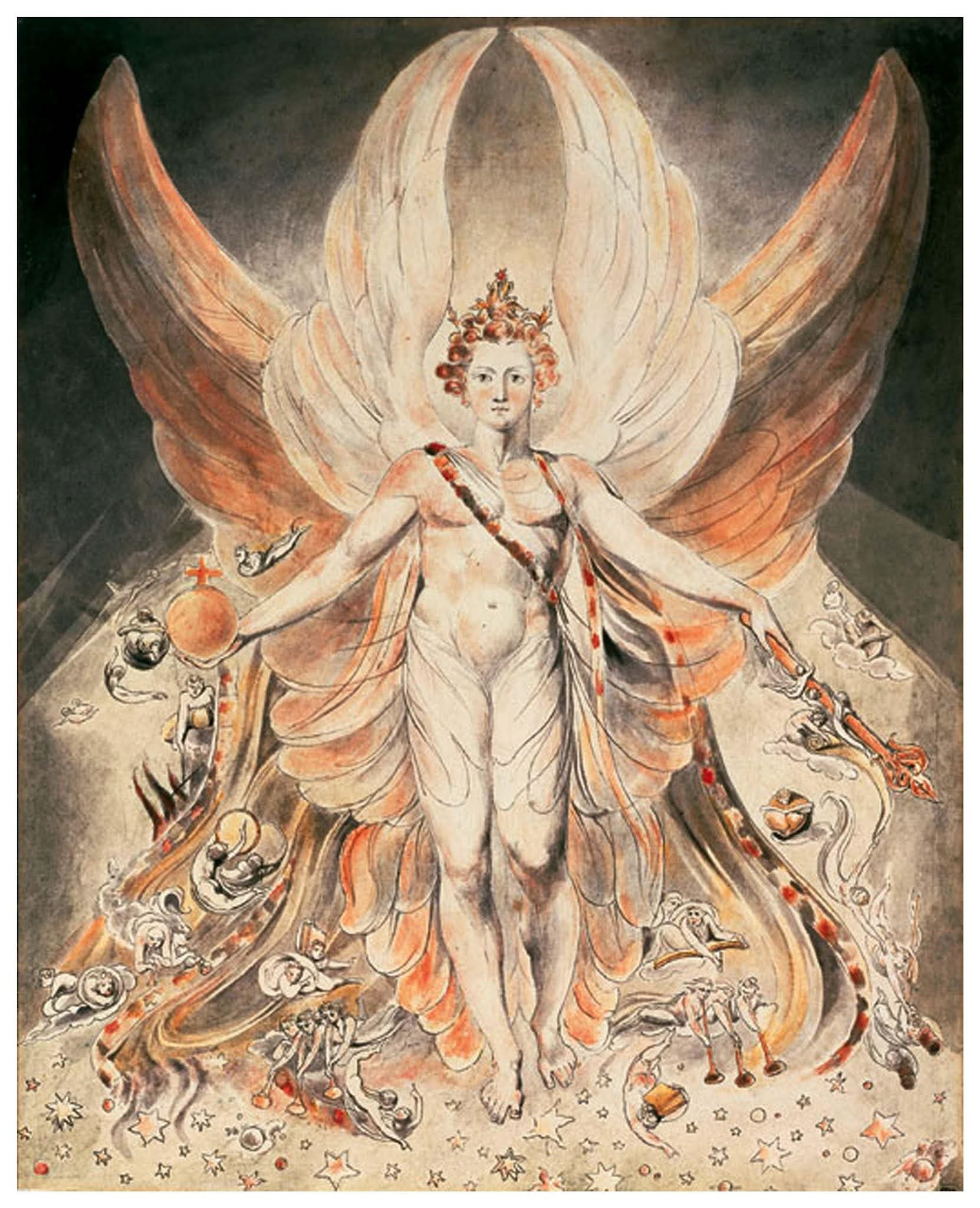
A Spiral Hidden in Heat: Discovery of a Harmonic Ratio Structure in the Kelvin Temperature Scale?

A Spiral Hidden in Heat: Discovery of a Harmonic Ratio Structure in the Kelvin Temperature Scale